Conventional Oven vs The Microwave

เขียนโดย pacub | 16:43

How do I know how much I am saving using small appliances as compared to the oven? How much does it cost to run the appliances in our household? Are we really saving money if we used them less frequently?

Many of us are concerned about budgets and frugal living and we wonder about these types of questions. At the end of the day, our goal is to save some money to make our lifestyle more worthwhile and to have a good order of our financial management.

We have plenty of choices available for cooking. It is very easy to find a kitchen equipped with a convection oven, microwave and a regular oven. The question is which one we should be using if we would like to save energy and money.

To get to the bottom of it, we have to explore some basics or elementary foundation how electric consumption works in the kitchen. How do our appliances consume energy? Basically, they use up energy in one simple way by producing heat.

When you're cooking in the kitchen you are automatically producing heat. This is the most common usage of electricity in the kitchen. To compare cooking appliances, look at the amount of electricity power (or wattage rating) required to operate an electrical device. You are able to find the wattage label on the appliance where it tells you the model number. However, if you have difficulty in finding the label you can look at the user manual. Please take note that the amount of electricity written on the label is the maximum amount that the appliance will be able to use.

For example, a slow cooker can be between 200 to 400 watts (W) while a majority of microwave ovens can range from 500 to 1200 W. Toaster ovens are in the same range as microwave ovens. The device that require the most electricity is the conventional oven that typically use 3000 W or more. In addition, a convection oven can use approximately 50 percent less power as compared to your standard ovens.

You can see that the standard oven needs up to three times as opposed to the microwave. You will also need to consider the period of time the oven is operating. Microwave cooking can take less time than the conventional oven of course this depends on what you're preparing.

Let's go back to our conventional oven vs. microwave example. If we assume that food is cooked in an hour's time in the standard oven compared with 15 minutes in the microwave, you can clearly see that the amount of electricity used to power the microwave is lesser. Therefore, in this case having a microwave is the better option.

In reality most of us use the oven four to five times a week let's say for an average of two hours at a time. In a month that can take up quite a lot of hours. To decide which type of oven to use you will have to ask yourself if it is able to meet your time and cooking needs, not at the amount of money it can save.
Related : Best Buy 1TB External Hard Drive 46 inch LCD TV

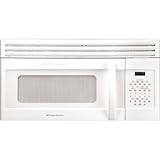
Frigidaire Gallery : GLMV169HB Microwave

เขียนโดย pacub | 16:27


Brand:
Rating:
5.0
List Price:
Our Price:
Total Price:

Usually ships in 1-2 business days


Frigidaire Gallery : GLMV169HB Microwave Best Buy


The Frigidaire Gallery Over the range microwave features: eleven variable power levels, memory cook recalls cooking instructions, one touch cooking, programmable for 4 cooking stages, six defrost options, super defrost up to 50 percent faster, thirteen sensor settings, and turntable on/off setting. Addition features include: 2-speed exhaust fan removes smoke and steam, audible signal elimination, auto start, child lock, demo mode, easy to read 7-digit, 2-color lighted display includes word prompt, removable cooking rack, 3 convenient venting options. Dimensions (in inches): 29 15/16 W x 16 3/8 H x 16 15/16 D. Color: Black


Recommend : 32 inch LCD TV

Do You Know The Difference Between A Water Filter And A Water Softener?

เขียนโดย pacub | 14:42

Several years ago I moved into a new home located in a rural area that was not supplied by the nearest municipal water system. My source of fresh water was a drilled well. The water is of very good quality but is very hard water. I really did not fully understand the term "hard water" for several years but I have finally come to grips with issues related to hard water.

I have been using a water conditioning system produced by Culligan since I moved into my home. I thought it was a water softener. Everyone called it a water softener and that is what I called it. I got a little discouraged with the system performance and began considering a change. The Culligan system required the addition of peroxide to operate correctly and I was using nearly 10 gallons per month. My water was still showing some iron and system pressure was falling considerably.

I began researching water softeners. To my surprise I was not operating a water softener. It was merely a deluxe "water filter". The water was passing through a media bed that filtered the water but it did not soften it. I realized at that point that two completely distinct processes were involved in proper water conditioning.

For optimum water quality the water should be filtered and then it should be "softened". I found that the softening process removed dissolved minerals that a filter allowed to pass through. That accounted for the mineral build-up on my appliances such as electric tea kettle and porcelain fixtures etc. Even system iron is present in different forms. Some iron is actually dissolved in the water and passes through a filter. It will however solidify when it is not circulating. It contributes a very large build-up inside hot water heaters.

I decided on a simple but high quality cartridge filter and a water softener that required salt pellets for constant optimum softening. The salt used by the softener does not actually enter your water supply. I found that it's only purpose was to flush out a special media bed that has special physical qualities that attract the minerals like a magnet. Many people are under the misguided belief that salt goes into your useable water - not so.

The media bed requires flushing at regular intervals to continue working at peak performance. The system will shut down at predetermined times and close itself off from your water supply. It then takes the salted water into the media bed. This will cause the accumulated minerals to release from the media. It is all flushed into your waste water system by a separate plumbing connection. Once this cleaning cycle completes, the system re-opens and sends fresh, conditioned water to your water supply again.

This is the point where I discovered "soft water". I was amazed. After I installed my new filter and conditioner it took about 2 days to fully displace all previous water from the water heater and storage system. Now when I take a bath the difference is absolutely amazing. After several years of "hard water", the water now truly felt soft and slippery. This is soft water. Soap lathers so much better and laundry detergent can be reduced considerably yet with better results.

This was my education regarding water softening and water filtering. There is considerable difference between the two processes. I hope this will help someone still lucky enough to be using fresh underground water.

Thanks To : Garmin Nuvi 1490T